 An eco-warrior at heart, shaped by the Blue Peter green badges of the ’90s and afternoons watching Captain Planet, I’ve been picking up a few pieces of litter after a surf for as long as I can remember. It’s a small ritual, nothing dramatic, but one that’s always felt quietly worthwhile.
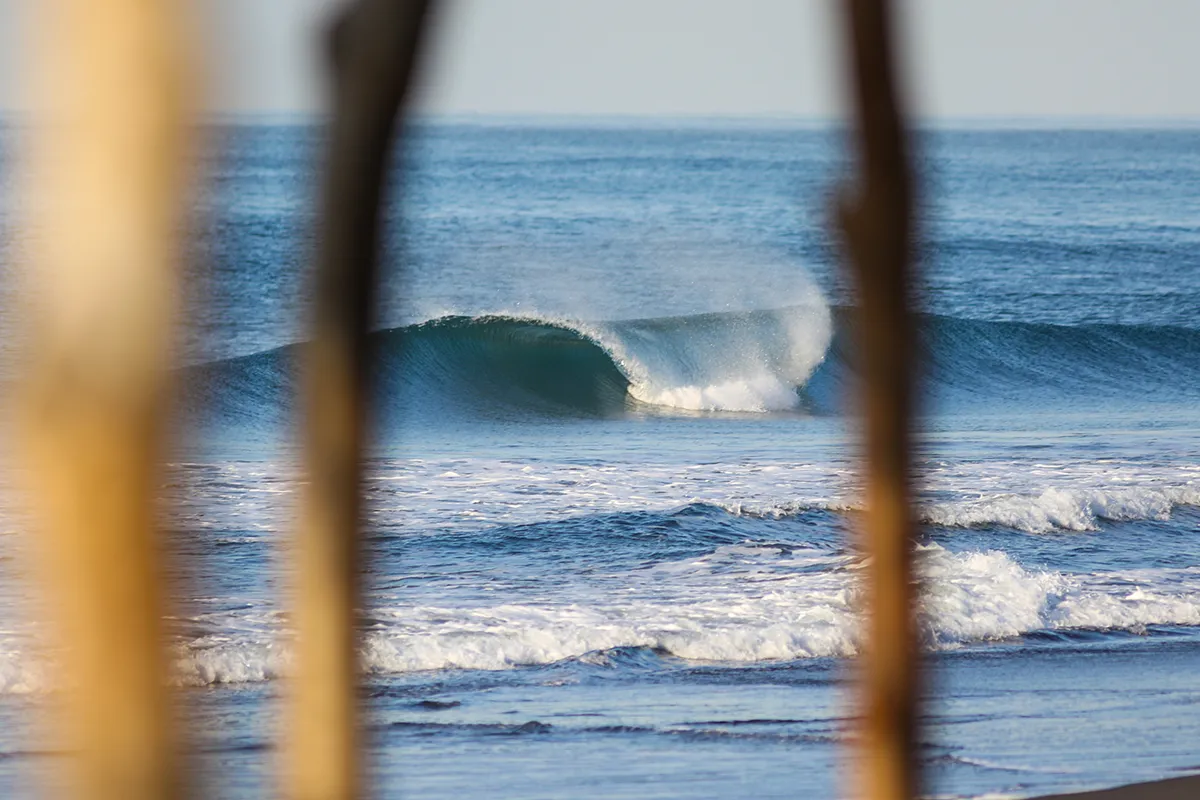
It wasn’t until eight or nine years ago, though, in El Salvador, that I began to wonder if those small, post-surf efforts might be having more of an impact than I’d ever imagined.
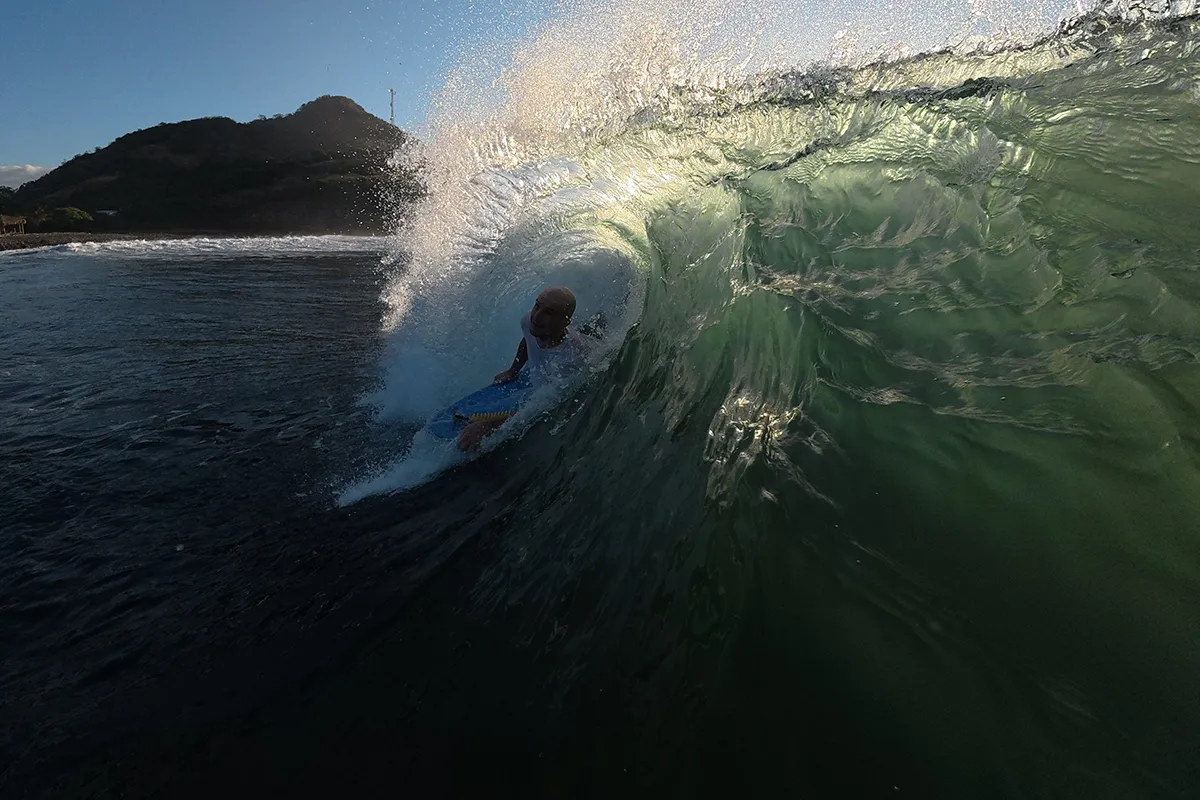
I’d just finished one of our usual sunset sessions with Bodyboard Holidays and was heading up the beach when I noticed a large, heavily tattooed local walking straight towards me, eyes locked. My mind immediately went into overdrive. Had I dropped in on someone? Done something stupid in the water? Back then, El Salvador still carried a reputation for danger, and my thoughts spiralled, irrationally, towards the kind of stories you hear about gangs like MS-13.
But instead of confrontation, he reached out his hand and shook mine.
“I’ve watched you every evening picking up litter after you surf,” he said. “On behalf of my friends and I, we thank you.”
At that time, plastic-free movements and organised beach cleans hadn’t really reached that part of the world. Yet just a year later, I saw a social media post about a plastic-free initiative starting up on that very same beach. I’d love to think that moment played some small part in sparking it, but whether it did or not, I’ll never know. What I do know is that small actions carry weight. Sometimes more than we realise.
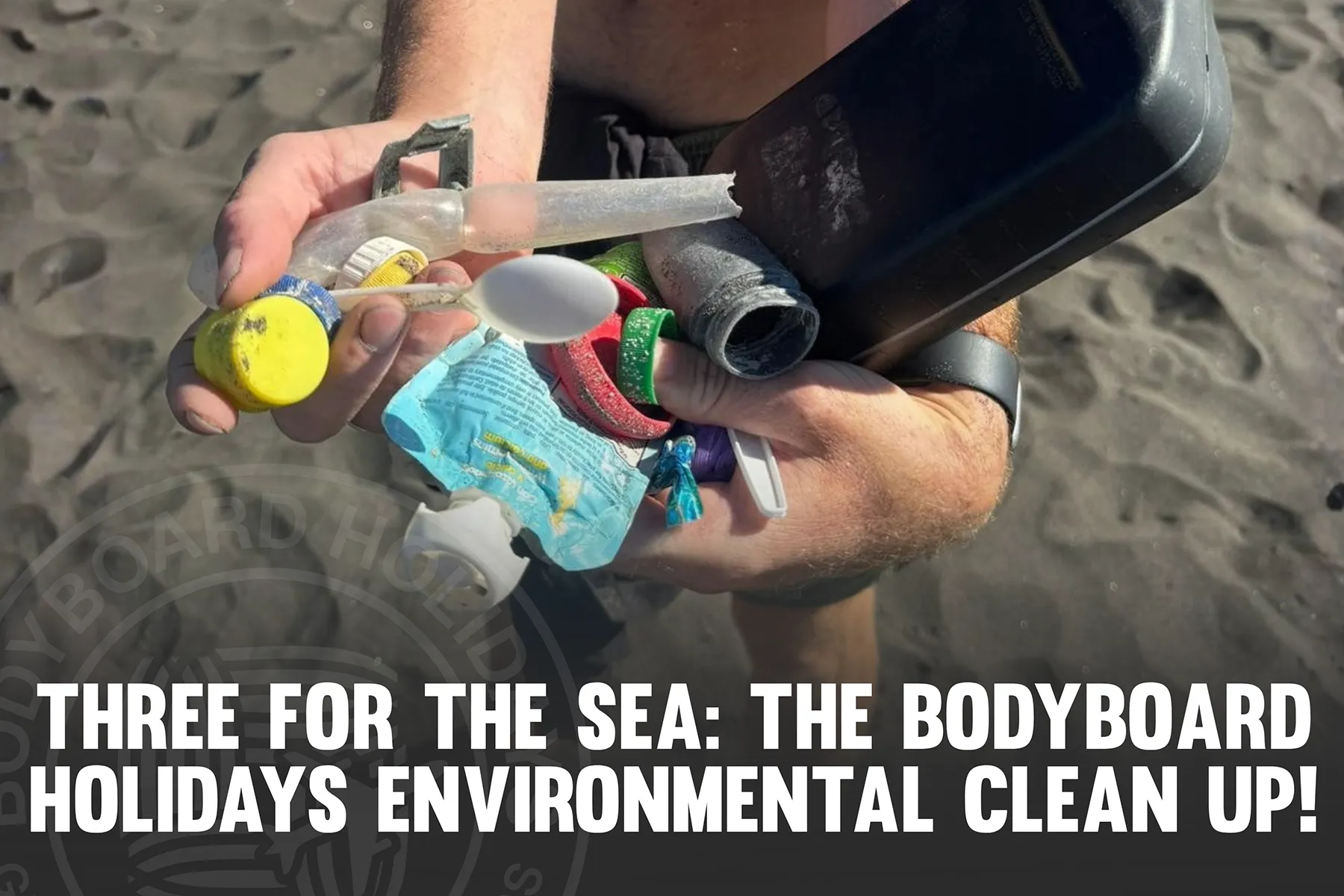
Fast forward a few years, and there’s now research suggesting that simple habits, like picking up three pieces of litter, really do make a difference. But before diving into that, it’s worth taking a step back: looking at the scale of the problem, how far things have come, whether individual action truly helps, and ultimately, why at Bodyboard Holidays we now take a bin bag to the beach and offering a group beach clean opportunity after every single session.
Fancy surfing those same waves? We run regular trips to El Salvador – explore the itinerary here.
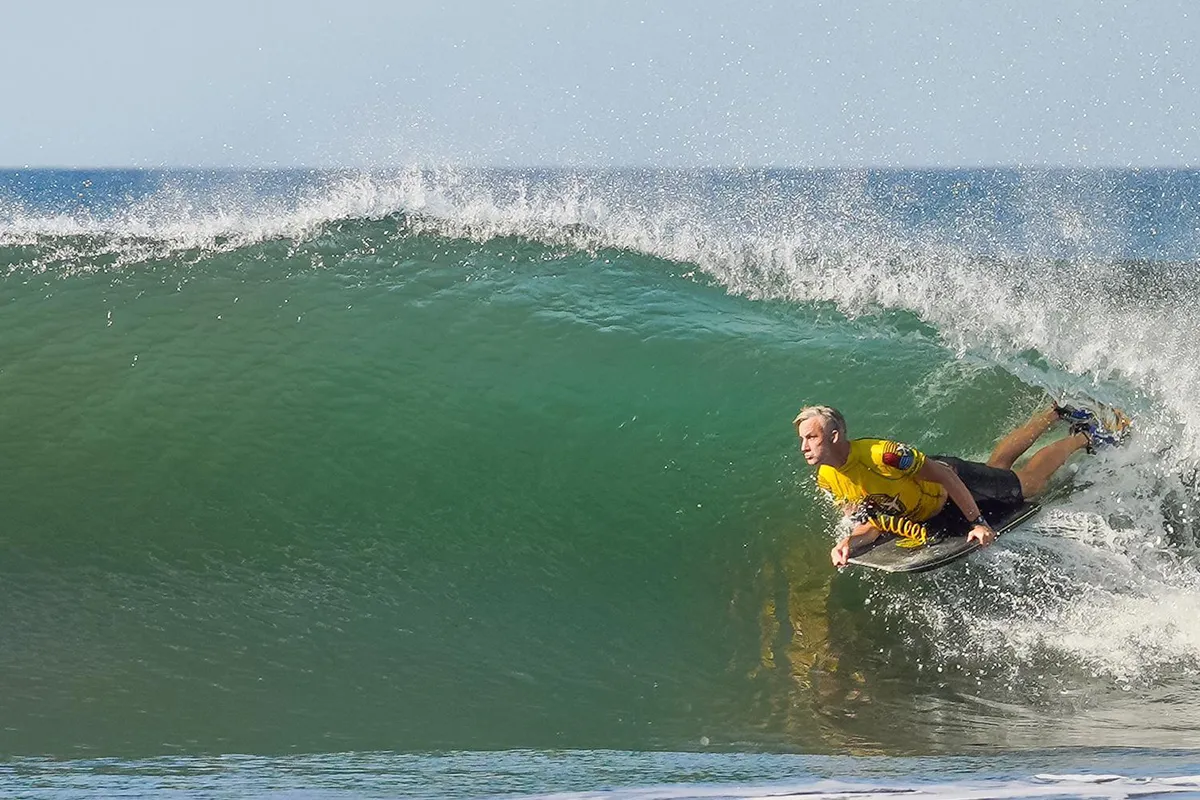
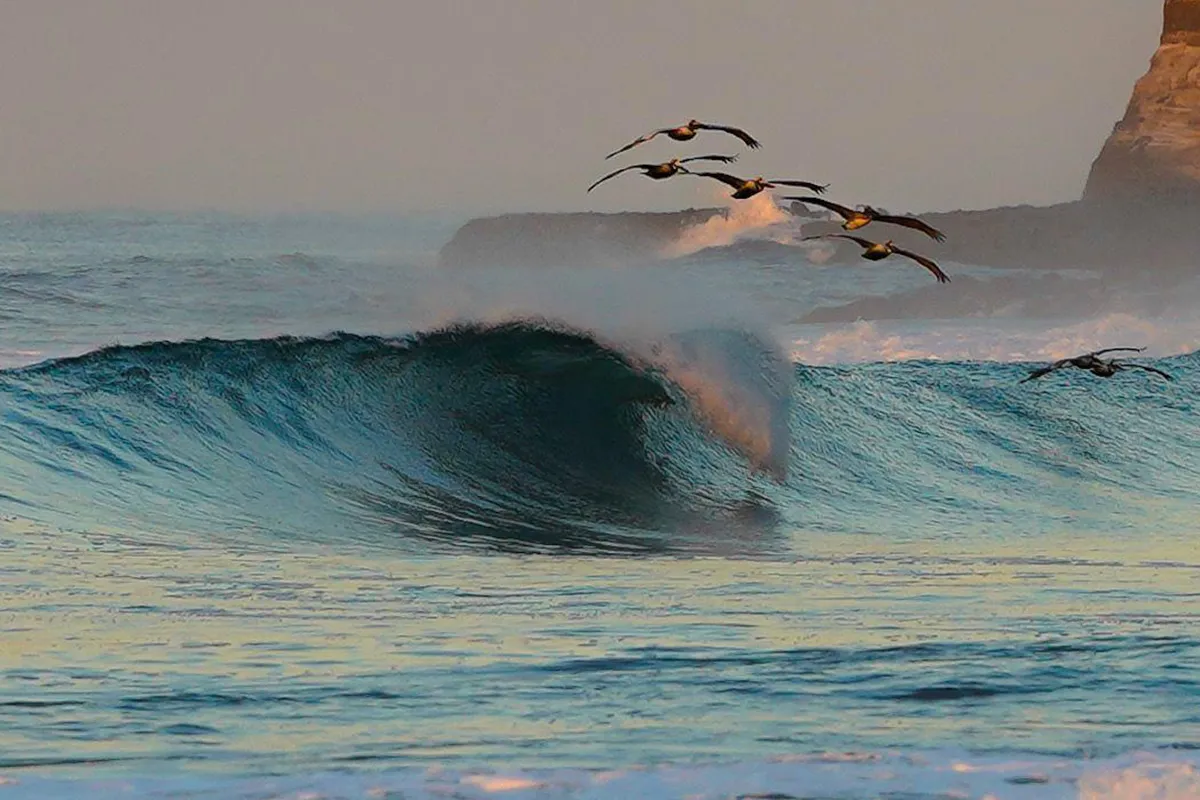
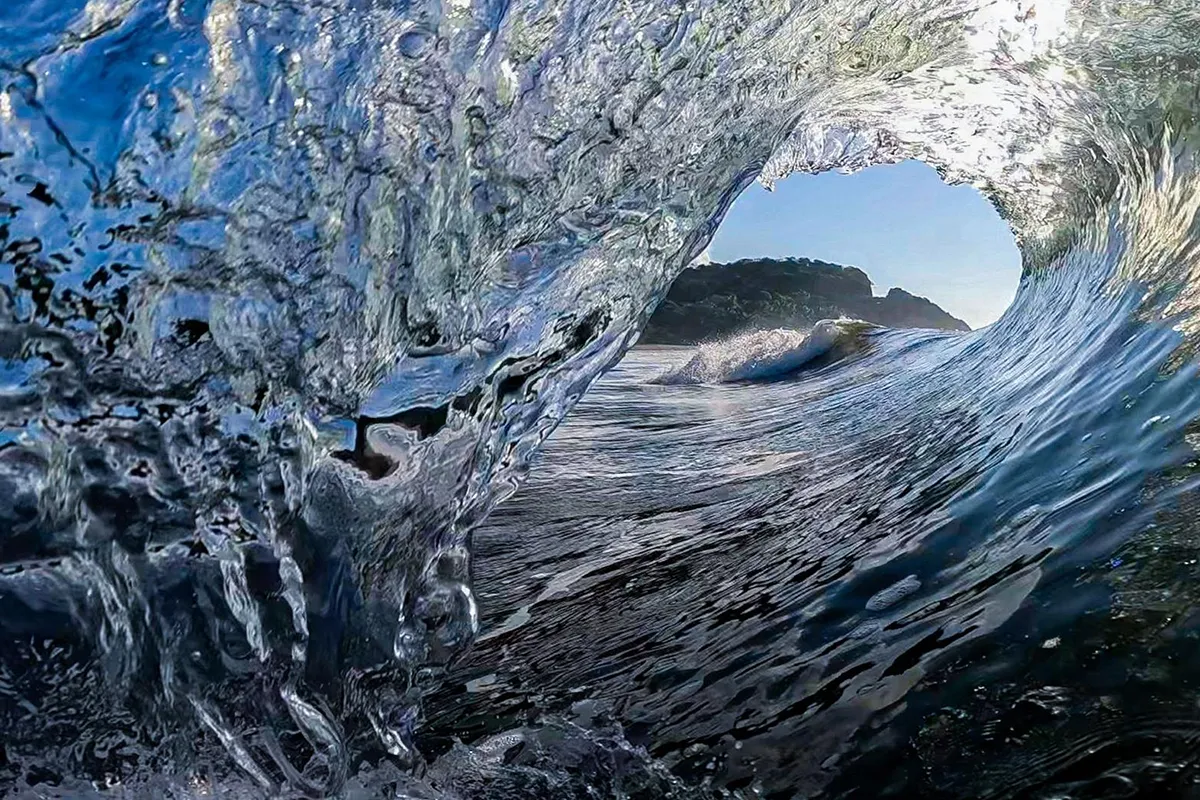
 If you spend any amount of time in the ocean, you don’t need stats to tell you there’s a problem. You see it. You feel it. It wraps around your leash, brushes past your arm mid-duck dive, or sits just above the tideline where you’re waxing up.
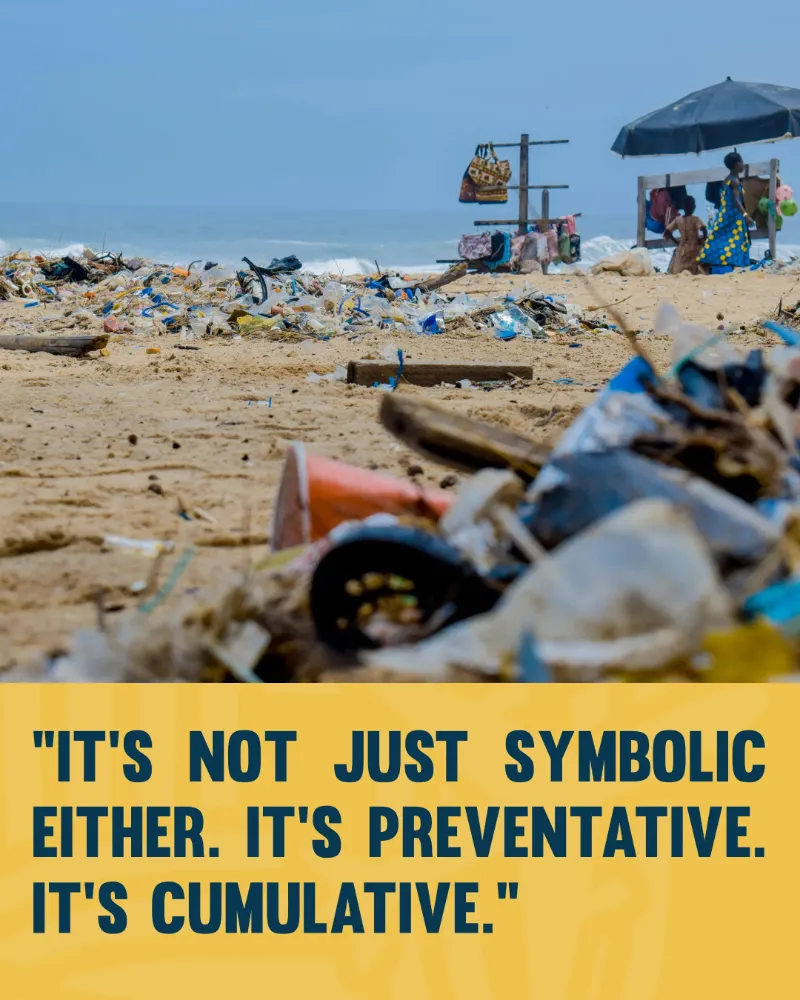
Plastic pollution isn’t just something happening “somewhere else”, it’s right there in the lineup. From bottles and bags to microplastics you can’t even see, our playground has become a holding zone for the world’s waste. In fact, it’s estimated that there are around 75 to 199 million tonnes of plastic already in the ocean, with millions more entering it every year. And the frustrating part? Most of it doesn’t come from dramatic, far-off events. It’s everyday stuff—poor waste management, single-use habits, things casually dropped and carried by rivers and wind until they end up back in the sea.
For coastal communities, especially in developing surf destinations, the issue is even more visible. Infrastructure often hasn’t caught up with consumption. Tourism brings opportunity, but it can also bring waste, more packaging, more plastic, more pressure on already stretched systems. Education around what actually happens to plastic waste often isn’t where it needs to be either, which only compounds the problem.
And yet, standing there on the beach with a board under your arm, it’s easy to feel like the problem is just too big.
 The good news is, things have shifted. A lot.
Five or ten years ago, beach cleans felt like a niche activity, something organised by a handful of passionate individuals or local groups. Now, they’re everywhere. From grassroots community efforts to global movements, there’s a growing awareness that looking after our coastlines isn’t optional, it’s essential.
You see it in reusable water bottles, bans on plastic bags, refill stations popping up in surf towns, and brands starting (slowly) to rethink materials and packaging. Even in places that once felt untouched by the conversation, like that beach in El Salvador, change is happening.
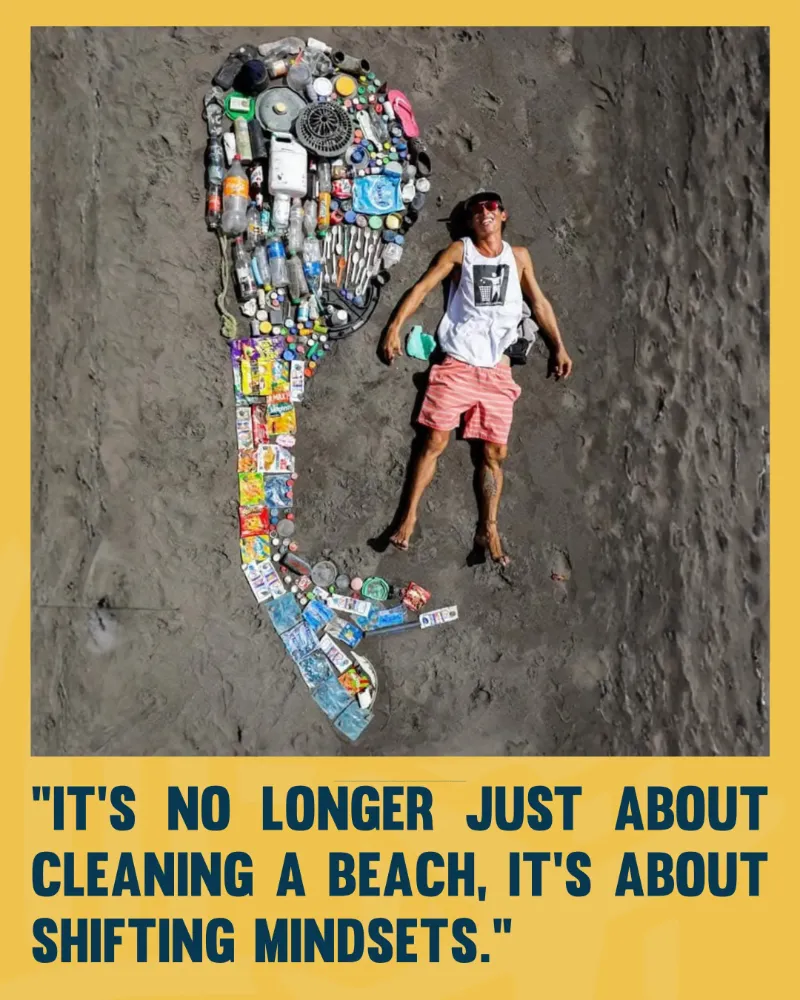
Social media has played a huge role too. What used to be a quiet, personal act, like picking up three bits of litter, has become a badge of honour, something people share, amplify, and build communities around. It’s no longer just about cleaning a beach; it’s about shifting mindsets.

 It’s the obvious question, and one I often get from friends a little more reluctant to pick up a bit of trash.
Does grabbing three pieces of litter after a surf actually make a dent in a global problem?
On paper, it can feel insignificant. But zoom out, and it starts to add up. If every surfer, every beachgoer, every dog walker picked up just a few pieces each time they were out, the cumulative effect would be huge.
There’s also the ripple effect, the bit you can’t measure.
That moment walking up the beach El Salvador stuck with me not because of how much litter I picked up, but because someone noticed. It started a conversation. It shifted a perception. And maybe, just maybe, it nudged something bigger into motion.
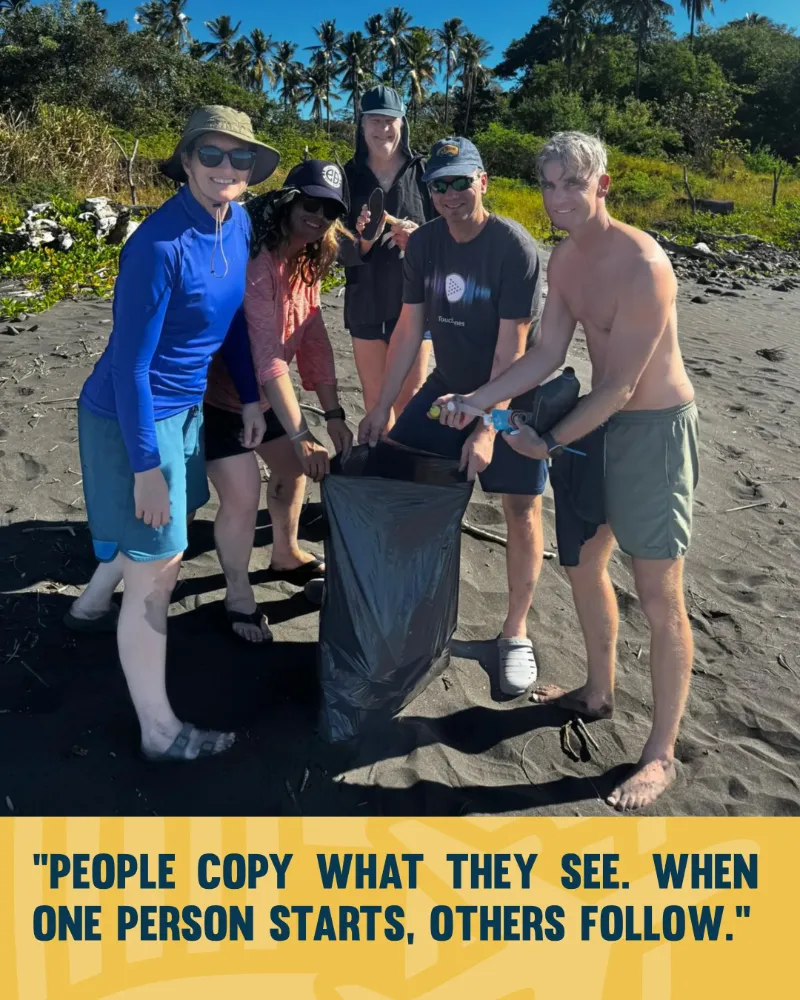
People copy what they see. When one person starts, others follow. It normalises the behaviour. Suddenly it’s not unusual to pick up litter, it’s unusual not to.
And that’s where real change begins.
 In recent years, science has started to catch up with what many of us have felt instinctively all along: small, consistent actions matter.
One study out of Norway really brought that home. Researchers found that when larger pieces of plastic were removed from beaches, the amount of microplastics in the surrounding environment dropped dramatically, by as much as 99.5% in some cases just a year later.
That’s pretty mind-blowing when you think about it.
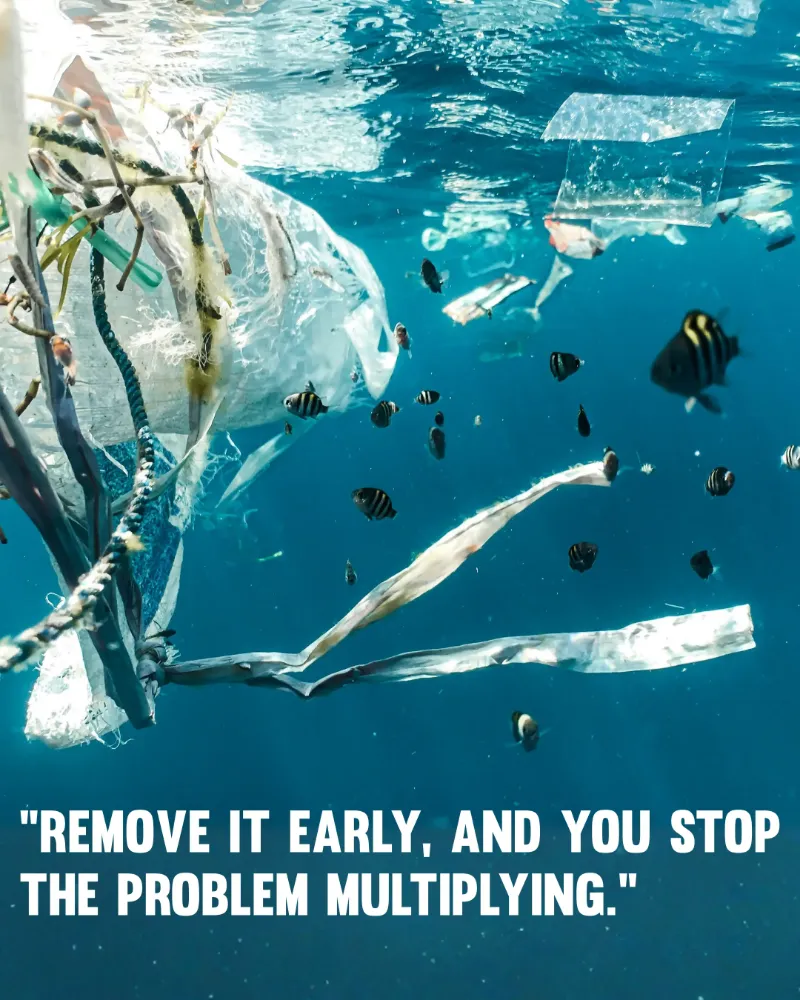
Because it highlights something most of us wouldn’t immediately consider: the plastic bottle or wrapper you pick up today isn’t just one less item on the beach, it’s potentially thousands of microplastic fragments prevented from ever entering the ocean in the first place. Sunlight, heat, and wave action break that stuff down far quicker than we tend to realise. Remove it early, and you stop the problem multiplying.
There’s also broader research from Norway showing that consistent clean-up efforts and citizen action can reduce overall litter levels on beaches over time, especially when it comes to everyday items linked to human behaviour.
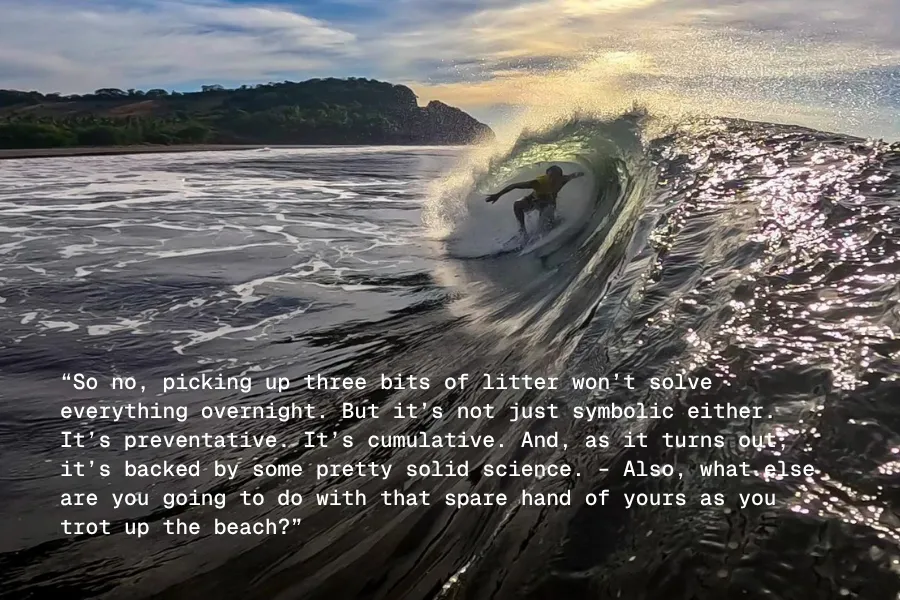
And that ties neatly back into ideas like “take three for the sea.” It’s not just a catchy slogan, it’s about intercepting waste before it becomes something far worse, and building habits that scale when enough people get involved.
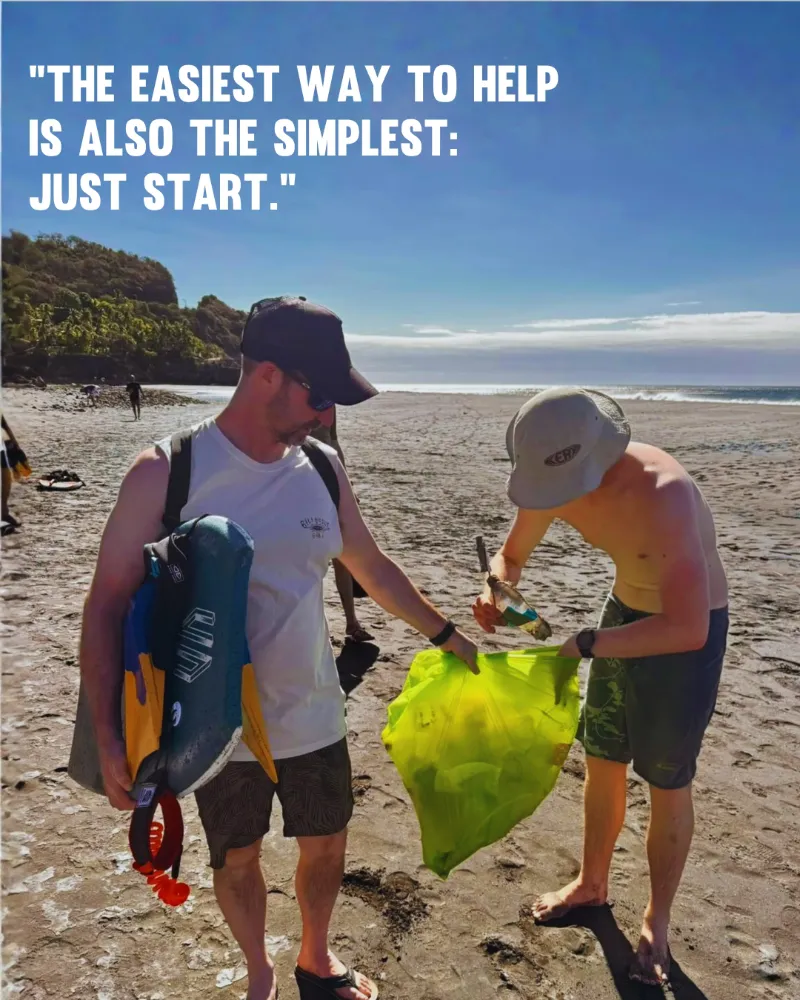
 The easiest way to help is also the simplest: just start.
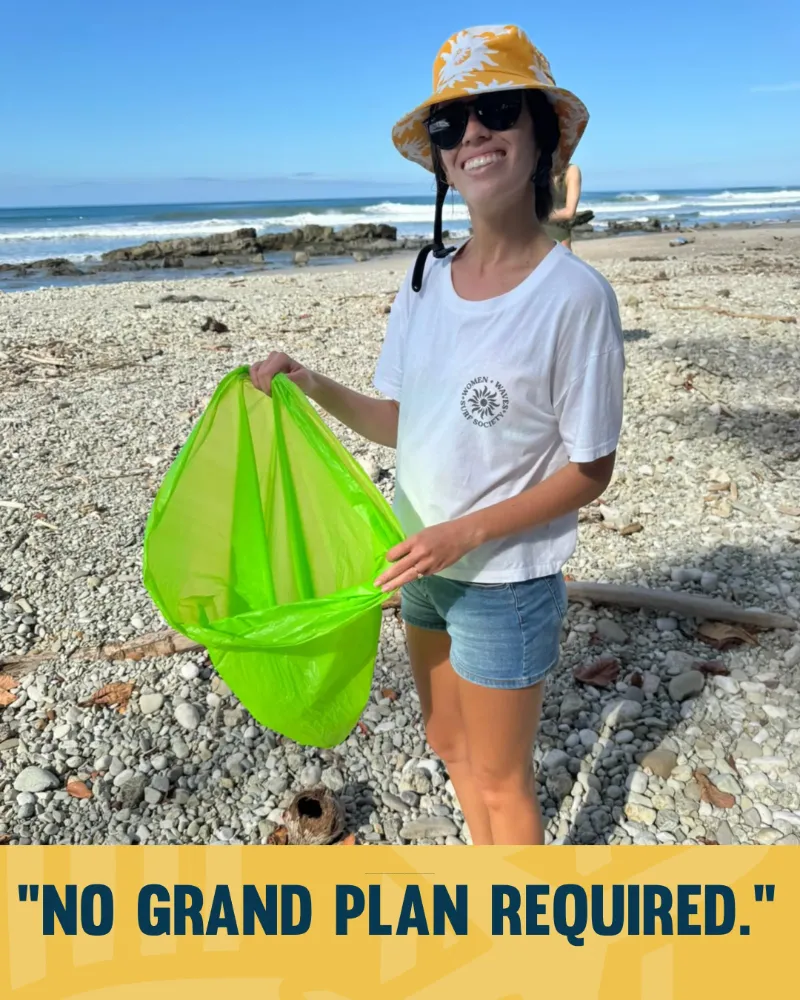
Pick up a couple of bits of litter on your way off the beach. Stick them in your board bag, your pocket, or the nearest bin. That’s it. No grand plan required.
If you want to take it a step further, bring a small bag with you. It doesn’t need to be a full-on organised beach clean, just something to chuck a few extra pieces into when you see them.
That said, if you are keen to get involved in something a bit bigger, beach cleans are far easier to find than they used to be. A quick search on social media, local community groups, or even just typing “beach clean near me” will usually turn something up. Surf shops, coastal cafés, and environmental groups often have posters up or events listed, and charities regularly organise clean-ups you can just turn up to, no experience needed.
Travelling surfers can make a big difference too. Respect the places you visit. Be mindful of your own waste. Support local businesses that are trying to do things the right way. And lead by example, because people are always watching, whether you realise it or not.
Most importantly, don’t get put off by thinking you’re not doing enough. Something is always better than nothing.
 Guests get involved without being asked. It becomes part of the rhythm of the trip, surf, come in, pick up a few bits, head back for food and a cold drink. No fuss.
And that’s kind of the point.
That same mindset runs through a lot of what we do. It’s why we’ve been pushing back for years against the throwaway culture around disposable bodyboards, something that might seem small on the surface, but adds up quickly when you look at the volume ending up in landfills and, ultimately, the ocean.
It’s also why we’ve partnered long-term with Mossy Earth, a nature restoration organisation focused on protecting and rebuilding biodiversity across different ecosystems. From rewilding projects on land to initiatives like their coral restoration work in Nusa Lembongan which we visit and support on our annual trip. It’s about contributing to something bigger than just the trips themselves, helping to look after the environments we all rely on.
None of this is about being perfect. It’s not about ticking boxes or making grand claims. It’s just about doing what we can, where we can, and encouraging others to do the same.
Because whether it’s bringing a bin bag to the beach, choosing better equipment, supporting restoration projects, or simply picking up three bits of litter after a surf, it all feeds into the same idea:
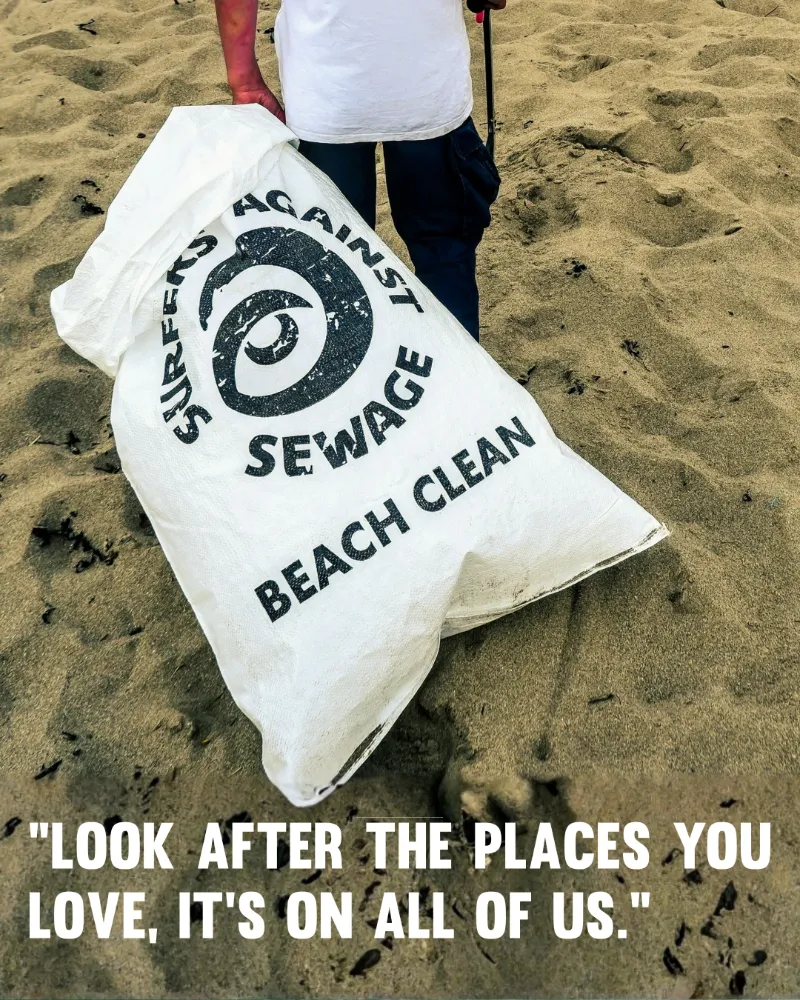
Look after the places you love, it’s on all of us.
If you want to surf incredible waves with a crew that takes this stuff seriously, take a look at our El Salvador trip or take a look at our calendar of world wide bodyboarding holidays – a bin bag and optional beach clean is always included.