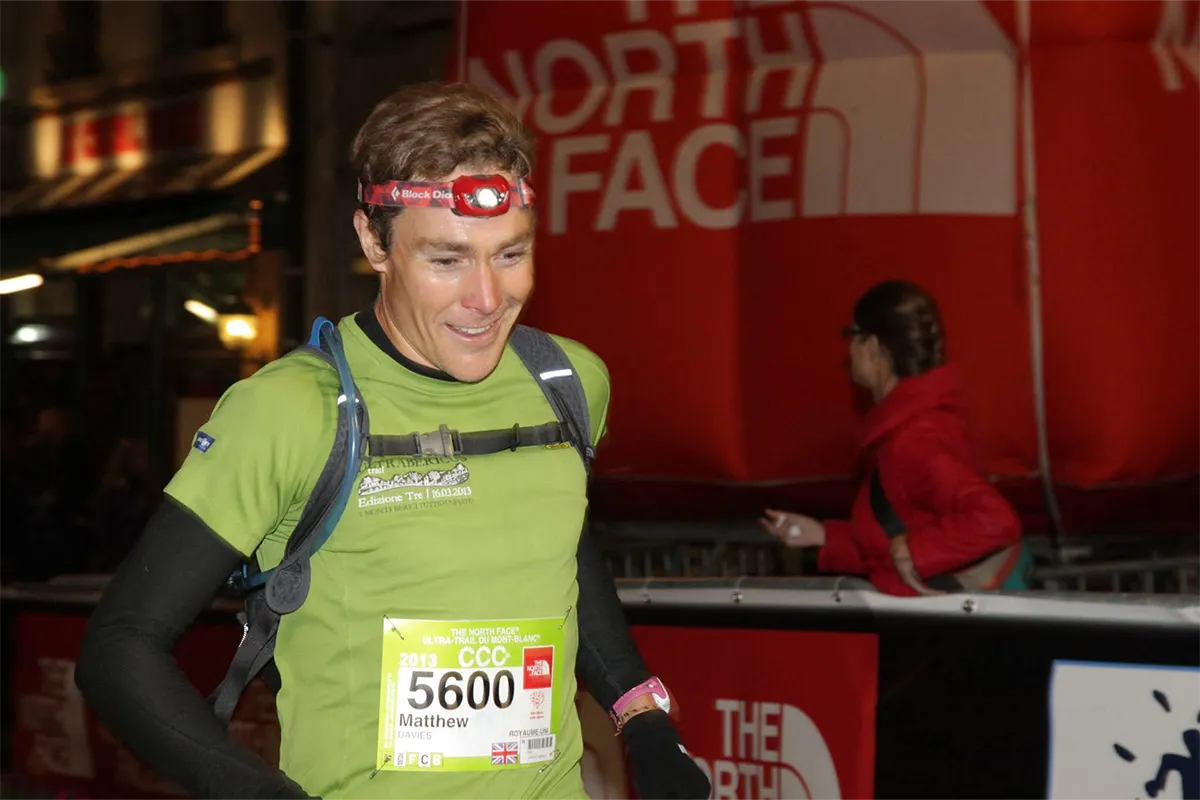
It’s nightfall in the Alps. The only thing separating the trail from the darkness beyond is the narrow beam of my head torch and the distant lights of a few runners snaking through the mountains ahead. I’m 70km and 11 hours into a 100km ultra marathon through France, Italy and Switzerland when I feel it, that first tightening deep in my groin.
Then both hip abductors seize completely.
Not a warning twitch. Not a slight stiffness. Full lock-up.
Normally this happens near the end of a race, when the finish line is close enough to drag yourself toward on pure stubbornness. But this time I’m alone in the forest with at least another seven hours still ahead of me. My running form instantly deteriorates into something resembling the waddling penguin walk my three-year-old does after filling his nappy.
I stop. Swear into the darkness. Then, after waddling a painful 500 metres, I finally reached the next checkpoint, a warm tent thick with the smell of tiger balm, sweat and chicken soup. I strip off damp cold clothes, refuel with electrolytes, shovel down bananas and salty snacks, then frantically rub arnica into my hip abductors before vigorously massaging life back into my legs.
Then I head back out into the night.
Slowly, the muscles begin to release. The running returns. By 2am, I cross the finish line in a strong time, moving well again, and without another cramp in sight.
But what does any of this have to do with bodyboarding?
Quite a lot, actually.
Because the exact same things that trigger cramps deep into an ultra marathon also show up during long bodyboarding sessions and bodyboarding holidays; fatigue, dehydration, cold, muscular overload, poor recovery and pushing harder than your body is prepared for. The only difference is that in the ocean, cramp can arrive while you’re fighting currents, paddling for a wave, or duck diving a cleanup set.
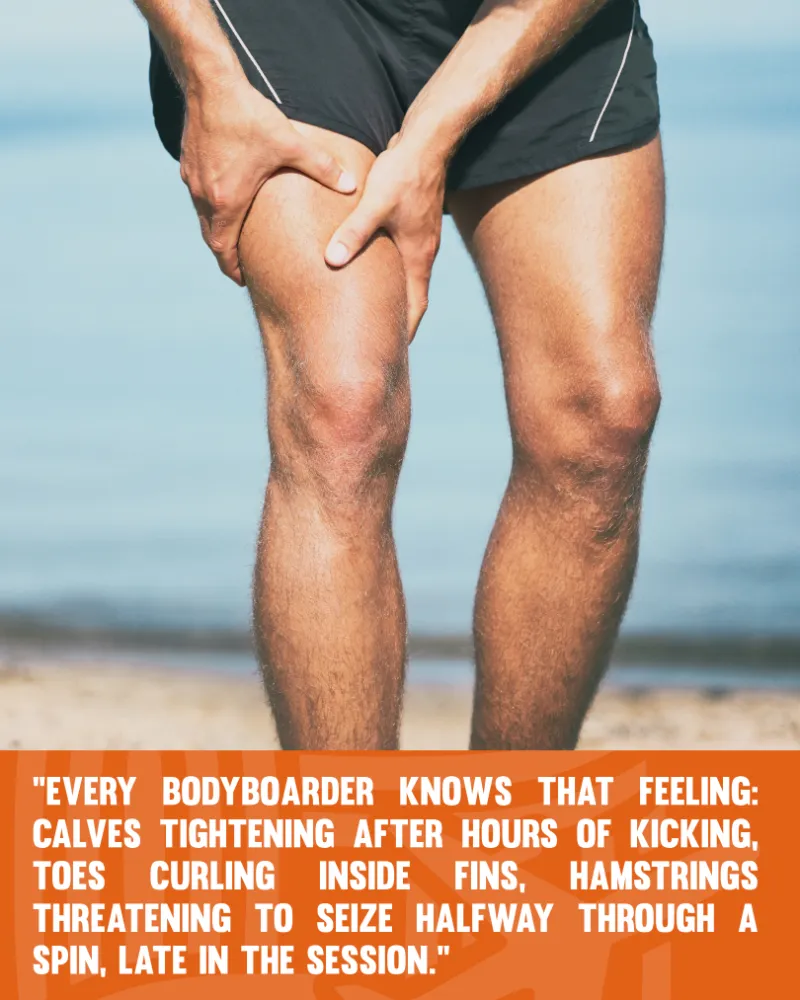
Every bodyboarder knows that feeling: calves tightening after hours of kicking, toes curling inside fins, hamstrings threatening to seize halfway through a spin, late in the session.
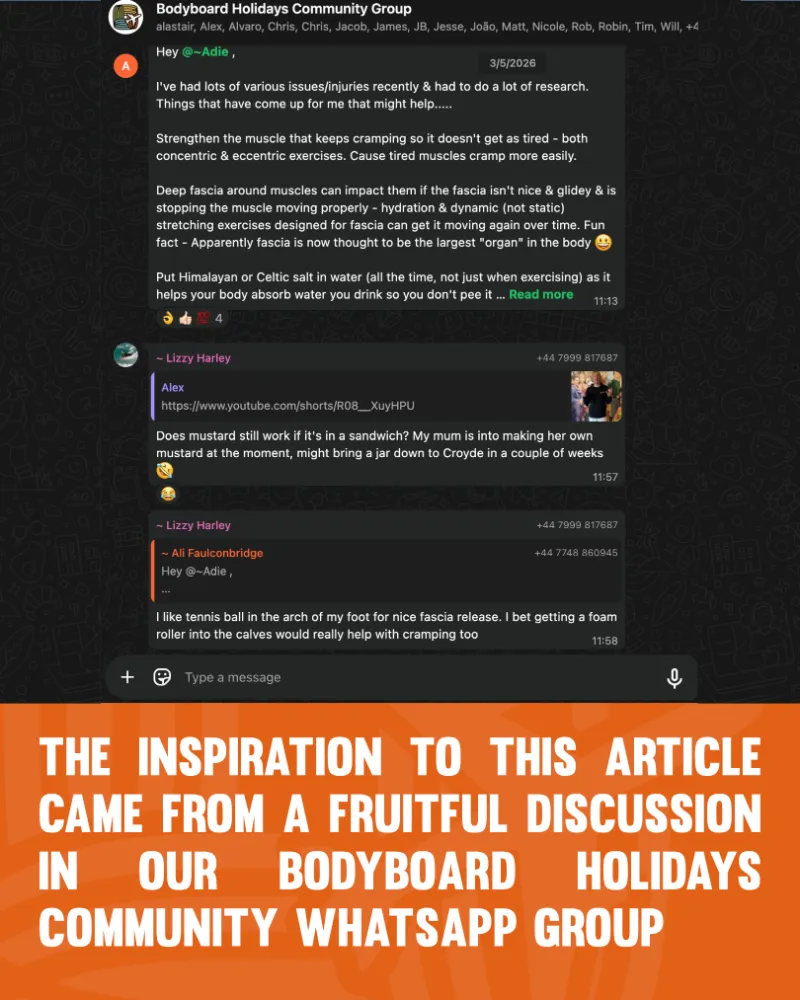
In this blog, we’ll look at what cramps actually are, why bodyboarders are especially prone to them, the most common cramp hotspots in the surf, and what you can do before, during, and after a session to stop cramps ruining your time in the water. We’ll also share insights from professional bodyboarders as well as members of our Bodyboard Holidays Community WhatsApp group, where a recent discussion on this very topic generated a wealth of comments, experiences, and practical advice that ultimately inspired this article. If you join a Bodyboard Holidays event you get automatic entry into this exclusive group!
A muscle cramp is, at its simplest, an involuntary and often sudden contraction of a muscle that you can’t consciously relax. It tightens hard, usually without warning, and can range from a brief spike of pain to a sustained lock that forces you to stop what you’re doing entirely.
For bodyboarders, cramps most commonly show up in the calves, feet, arches, toes, and sometimes the hamstrings. These are all the muscle groups doing the constant work of paddling, stabilising, stalling and adjusting your position on the board such as when doing a 360 spin. Once one of them seizes, it can feel like the entire session gets taken away in an instant.
Most cramps last anywhere from a few seconds to a couple of minutes, but the after-effects can linger much longer. A lingering tightness or vulnerability that makes you hesitant to push hard again straight away.
There isn’t one single cause. Most sports medicine research suggests cramps are usually multifactorial, with neuromuscular fatigue playing a central role alongside hydration and electrolyte imbalance. In other words, the muscle has typically been pushed beyond its ability to properly recover and regulate itself in the moment.
Cold water can make this worse. When your body cools down, blood flow to the muscles decreases slightly, which can reduce efficiency and make them more prone to tightening under stress. This is one reason cramps often feel more sudden and severe in colder surf conditions.
The concept of fatigue-driven cramping is well documented in sports science literature, including work published in journals such as the British Journal of Sports Medicine and the Journal of Athletic Training, both of which highlight neuromuscular fatigue as a key trigger in exercise-associated muscle cramps.
Understanding that is only half the picture. The real story becomes clearer when you look at what bodyboarders are actually doing in the water, and why our setup makes us especially vulnerable to cramp in the first place.
Fin Use and Constant Calf Engagement
The biggest difference between say surfing and bodyboarding comes down to the fins.
Bodyboarders kick constantly. Even when you think you’re resting between waves, your legs are rarely fully relaxed. The fins keep the calves under near-constant tension through repetitive plantar flexion. The pointed-toe position that drives propulsion through the water. Over time, this creates a steady load through the calves, feet, arches, and toes that builds quietly throughout a session.
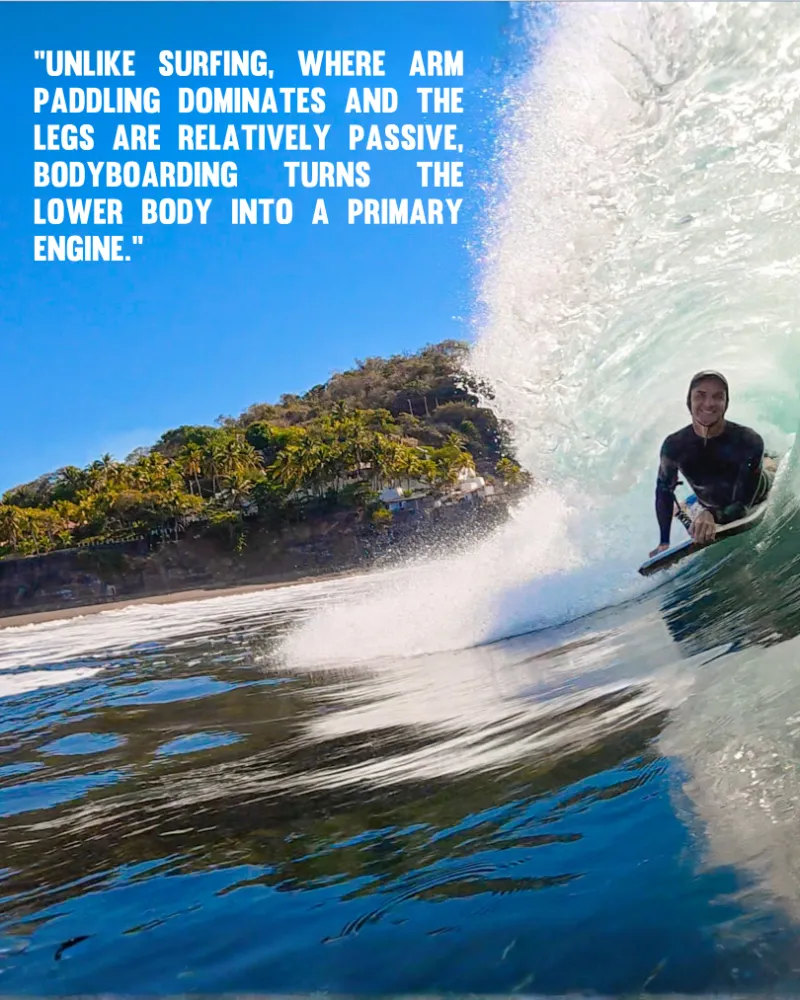
Duck diving adds another layer. Each dive forces a sharp, forceful compression through the lower legs, followed by an explosive kick to reposition. Long paddles out back can turn into extended periods of continuous kicking, especially in difficult conditions. Unlike surfing, where arm paddling dominates and the legs are relatively passive, bodyboarding turns the lower body into a primary engine.
By the time fatigue starts to accumulate, those small repetitive movements become the exact trigger points for cramp.
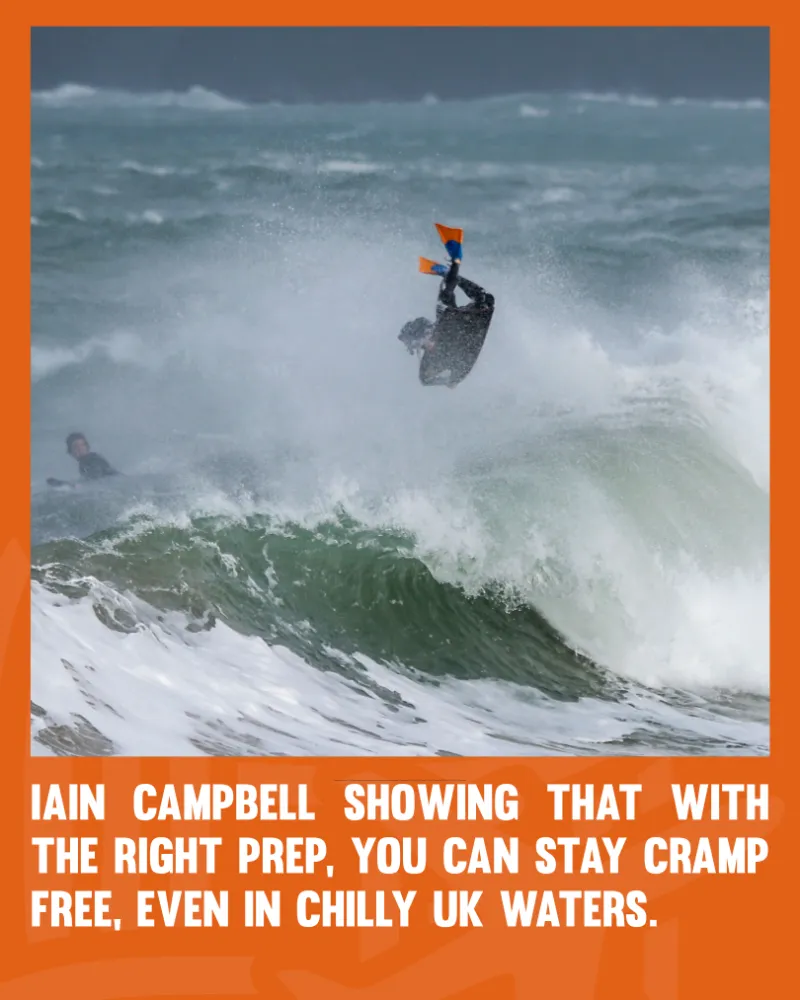 This is especially relevant in colder surf destinations like Ireland, the UK, and South Africa, where long sessions in cold water are common. What feels manageable in warm water becomes far more demanding when muscles are battling both fatigue and temperature stress.
The result is often the same: earlier onset of tightness, reduced control, and a higher likelihood of sudden cramping during effort spikes. Growing up bodyboarding on the UK’s chilly south coast (6℃ in the depths of winter), cramp felt less like a possibility and more like an inevitability.
Heavy Kicking in Currents
Finally, there’s the ocean itself.
Bodyboarders spend a lot of time dealing with water movement that demands short bursts of high-intensity effort. Strong rips require powerful kicking just to hold position. Late take-offs often mean explosive acceleration from a standstill. Heavy hold-downs or repeated wipeouts can leave you swimming hard just to regain control.
These are not steady, controlled movements, they’re reactive and intense. That’s exactly the type of effort pattern that accelerates neuromuscular fatigue in the calves and feet.
And once fatigue meets repetition, cramp stops being a possibility and becomes a very real outcome.
 Once cramp takes hold, it rarely feels random. It tends to target the same muscle groups again and again, especially in bodyboarding where the movement patterns are so repetitive. Understanding where it hits, and why, makes it much easier to spot the warning signs before a full lock-up happens, like it did to me in the Alps.
Calves (the first to go)
The calves are the most common cramp point for bodyboarders, and it’s not hard to see why.
They’re under constant load from paddling, held in a shortened, flexed position through plantar flexion for long periods. Every kick engages them again, whether you’re paddling out, chasing a wave, or holding position in the lineup. Unlike land-based training, there’s rarely a true recovery phase for the muscle during a session.
Once fatigue builds, the calf can tip from “working hard” to “fully locked” in a matter of seconds, often mid-kick or just as you’re trying to push into a wave.
Feet and Toes (small muscles, big problems)
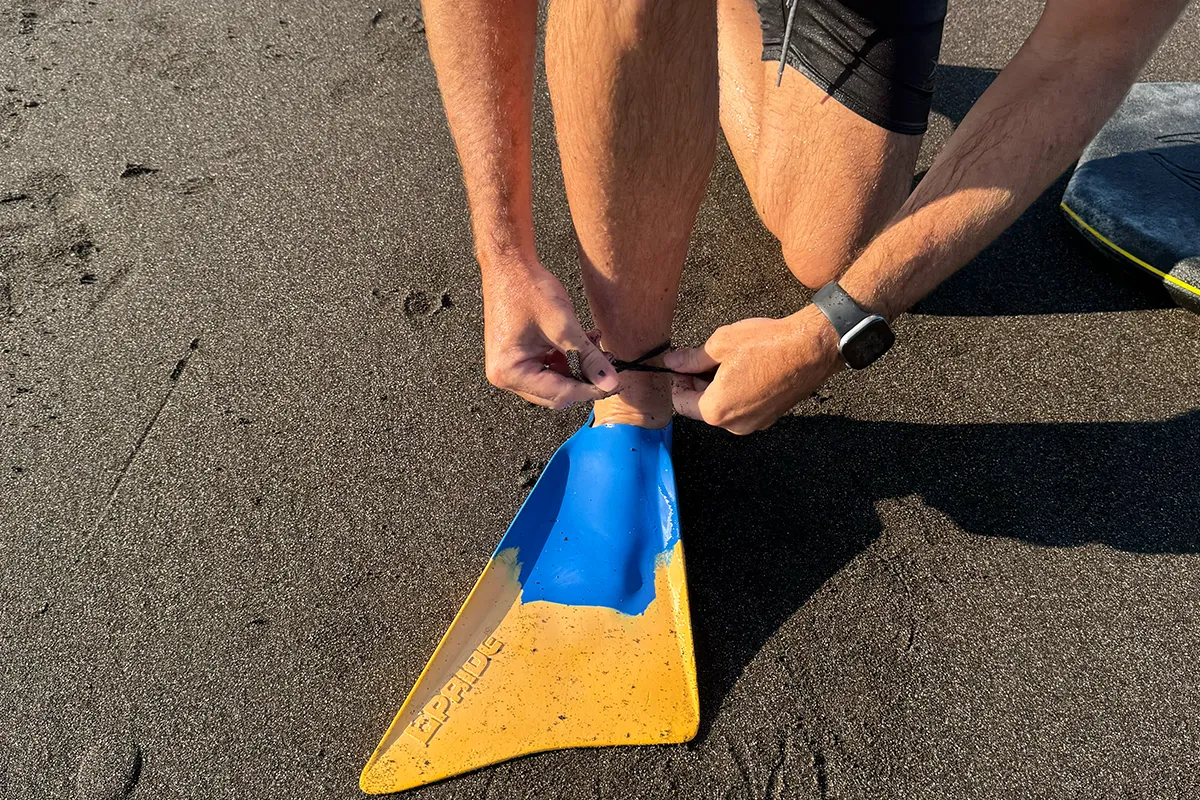
Foot cramps are particularly common in bodyboarders using stiff or tight fins.
The toes are constantly gripping and stabilising inside the fin pocket, especially in heavier surf where control matters more. Over time, the small intrinsic muscles of the foot become overloaded from this constant stabilisation effort.
It often starts subtly, a tightening in the arch or toes curling slightly, before escalating into full foot cramp that can make fin control almost impossible.Cold water and poor-fitting fins make this significantly worse, as both increase tension in already overworked muscles.
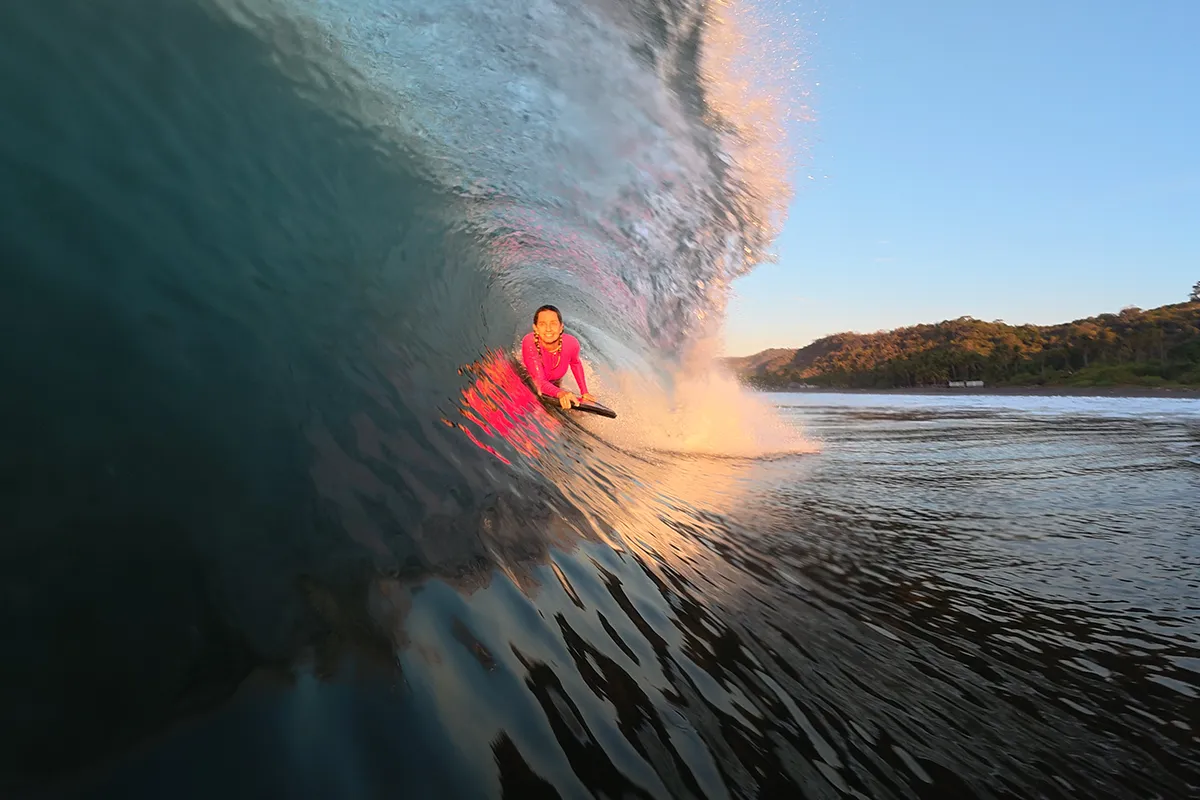
Hamstrings (the delayed reaction)
Hamstring cramps tend to show up later in a session or during longer surf trips when fatigue has really accumulated.
They’re usually linked to repeated explosive kicking, especially when sprint paddling for waves or driving hard through whitewater when paddling out. Unlike calves and feet, hamstring fatigue is often less obvious until it suddenly isn’t, and when it goes, it can shut down kicking power almost instantly. Because they’re part of the larger posterior chain, hamstring cramps often signal that overall leg fatigue is already well advanced.
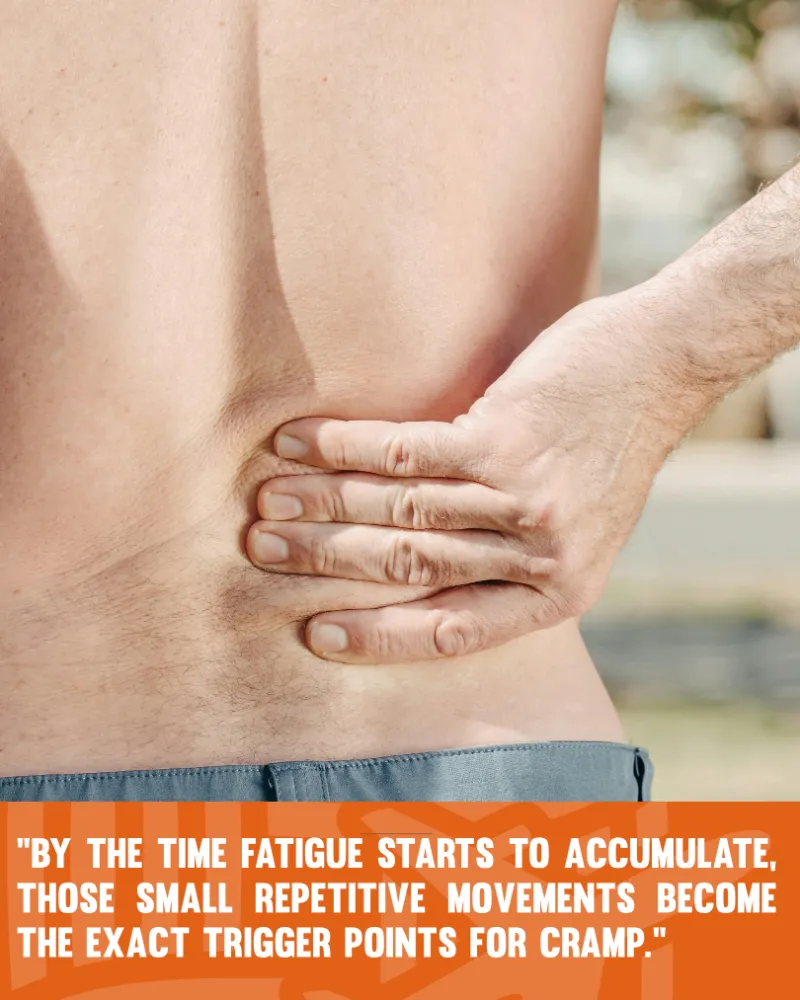
Hip Flexors and Lower Back (the hidden overload)
Less talked about, but increasingly common in longer sessions, are cramps in the hip flexors and lower back.
These muscles work continuously to keep the bodyboard position stable, especially when paddling or in the trim position. They also help coordinate kicking mechanics, meaning they never fully switch off during a session.
When fatigue builds, they can tighten in a way that affects posture and movement efficiency, indirectly increasing strain on the calves and hamstrings too. This is often where bodyboarders start to feel “stiff” or out of rhythm before more obvious cramping appears elsewhere.
The pattern behind it all
Across all of these areas, the pattern is the same: small, repetitive muscle contractions performed under fatigue, with limited recovery time in between.
Cramp doesn’t usually appear in isolation. It tends to move through the body in a sequence, from calves and feet first, then into hamstrings and supporting muscle groups as fatigue deepens. Understanding that progression is key, because it gives you a chance to react before a full lock-up ends your session.
Dehydration (but not in isolation)
Dehydration is often blamed first, and while it definitely plays a role, it’s rarely the whole story.
On a bodyboard trip, it’s easy to underestimate fluid loss. Long sessions in the sun, salt water exposure, and constant movement all contribute to gradual dehydration, often without obvious thirst signals. By the time cramps appear, hydration levels are usually already behind where they should be.
But it’s important to understand this isn’t just about “not drinking enough water.” Dehydration tends to amplify fatigue and reduce muscular efficiency rather than directly causing cramp on its own.
Electrolyte imbalance
Alongside fluid loss comes electrolyte depletion, particularly sodium, potassium, and magnesium.
These minerals play a key role in muscle contraction and relaxation. When levels drop, the neuromuscular system becomes less stable, making muscles more likely to misfire under load. That’s when a normal contraction can tip into an uncontrolled cramp.
This is especially relevant on surf trips where sweating is constant but replacement is inconsistent, a common pattern when people rely only on plain water instead of balanced hydration.
On one of our Portugal bodyboarding camps, a group of guests from Hawaii had an unusual fix for cramps: whenever one hit, they’d paddle in, down a small sachet of mustard, then head straight back into the surf.
In reality, cramp is almost never caused by one thing alone. It’s usually the intersection of fatigue, hydration status, electrolyte balance, and mechanical load, all converging at the worst possible moment.
And in bodyboarding, those conditions are easy to reach without even realising it, especially on long, committed surf days where the focus is simply on staying in the water for as long as possible.
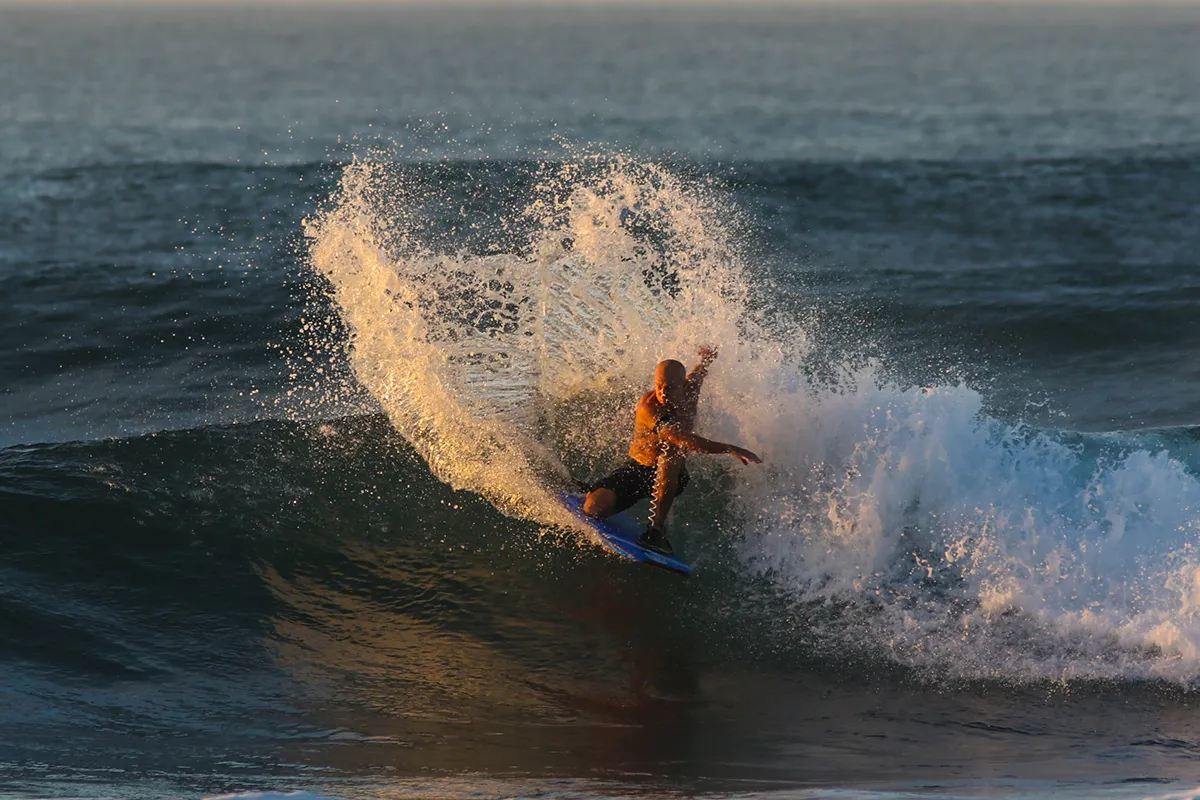
 Warm up before entering the water
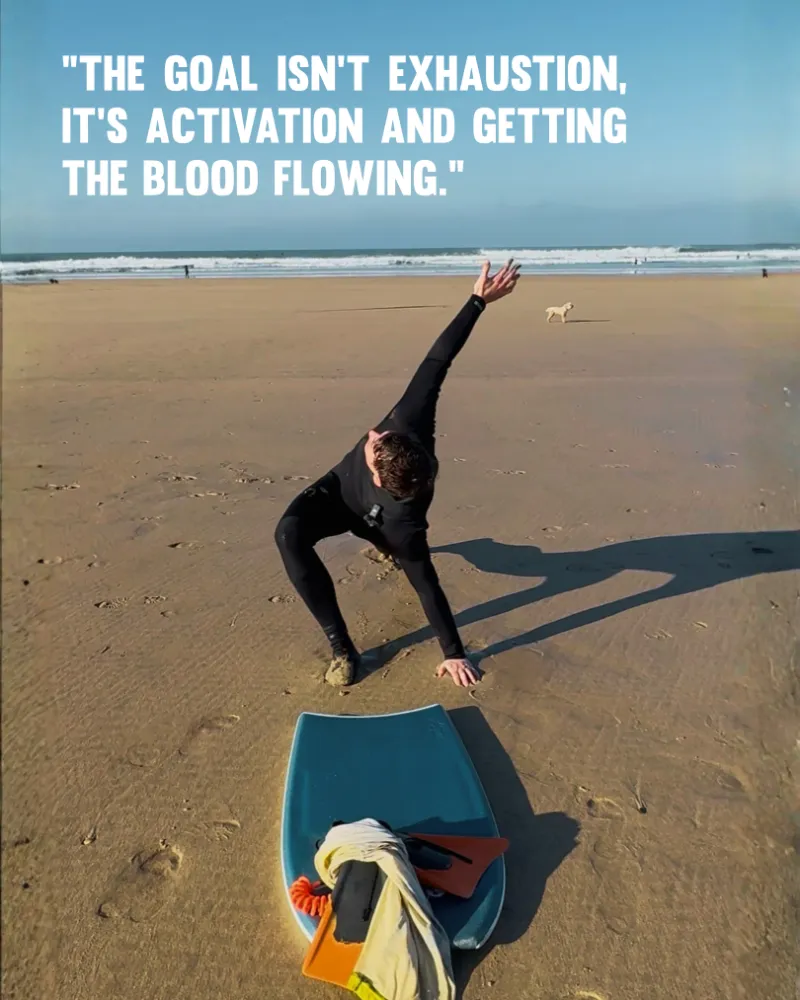 Warm up before entering the water
One of the most overlooked parts of bodyboarding is the warm-up.
Most people go straight from sitting, driving, or walking on the beach into a full-intensity paddle heavy session. That sudden jump in workload is exactly what fatigues muscles early.
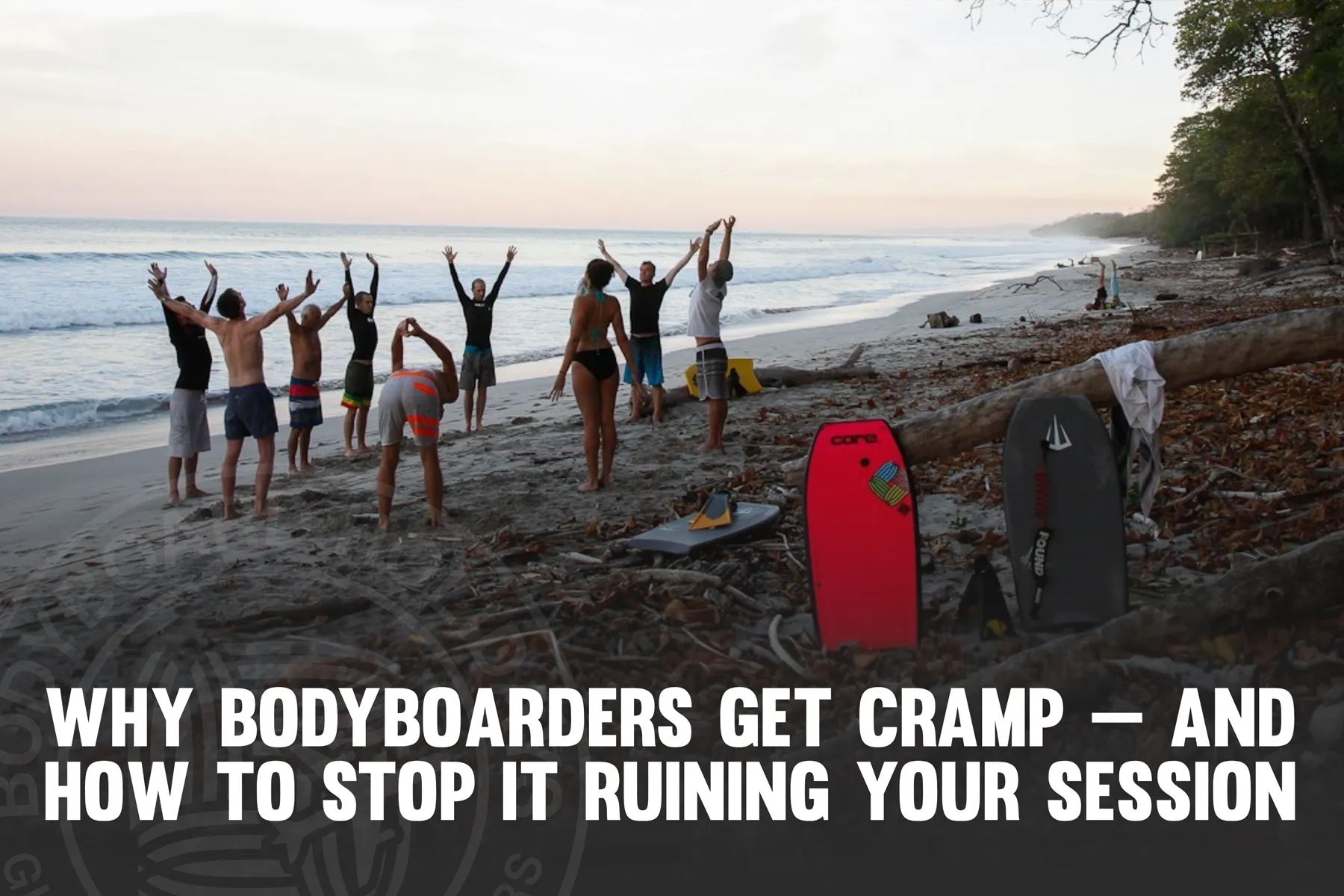
A short land-based warm-up prepares the calves and ankles for what’s coming. Simple movements work best: calf raises to activate the lower legs, ankle rotations to loosen mobility, leg swings to open the hips, or even a light jog along the beach. The goal isn’t exhaustion, it’s activation and getting the blood flowing.
Importantly, this should be an active, mobile warm-up rather than long static stretching, which can sometimes leave muscles feeling less reactive before intense exercise. Longer static stretching is generally more effective after a surf, when the goal shifts from activation to recovery.
By the time you hit the water, your muscles should already feel switched on, not shocked into work.
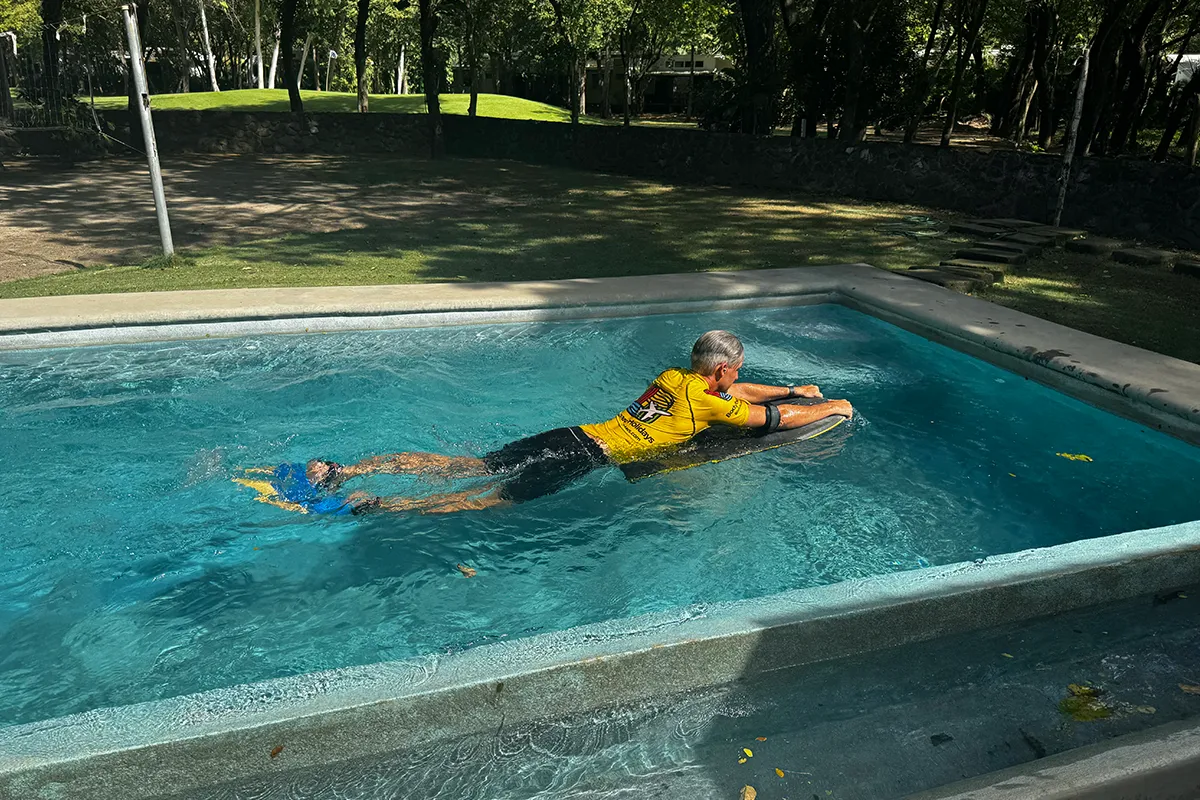
One of the most common mistakes we see on our Bodyboard Holidays is our guests doing too much, too soon. I always say in our welcome meetings, that the week is a marathon and not a sprint.
I appreciate that after travelling, it’s tempting to maximise every available session. But jumping straight into multiple long sessions on day one or two often leads to accumulated fatigue that carries through the rest of the trip.
A better approach is progressive load: start with shorter or fewer sessions, allow the body to adapt, and build intensity over the first few days. Recovery is part of performance, not a break from it.
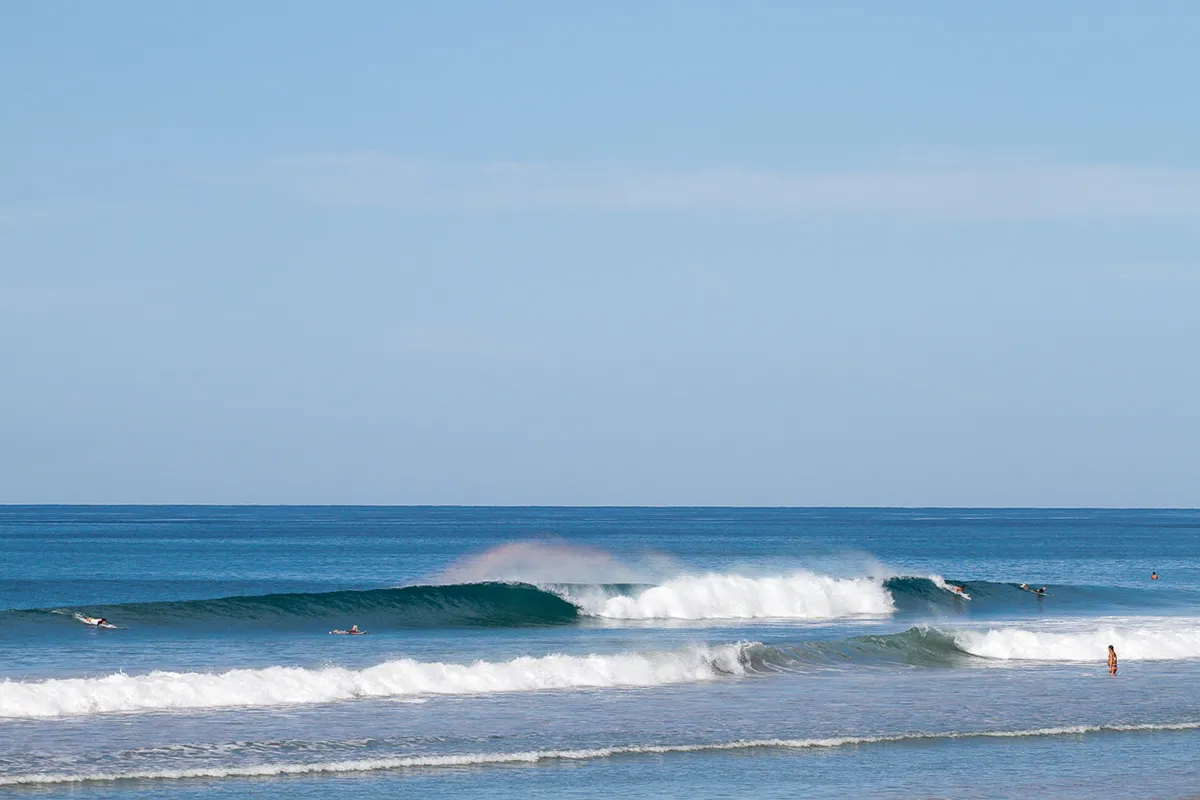
The key is to avoid fighting the water while the muscle is locked. Continuing to kick hard or push against the cramp usually makes it worse and burns energy you may need for getting back to shore.
If the cramp doesn’t ease quickly, or if conditions are heavy, don’t hesitate to signal for assistance. There’s no pride in pushing through a situation that could escalate. Most experienced surfers and bodyboarders will recognise the signs immediately and help if needed.
In stronger surf, position yourself so you’re not getting pushed into impact zones while the cramp is active. Use the board to float, drift, and recover rather than actively swimming against the water.
Once the initial spasm starts to release, move slowly and deliberately. Reintroduce gentle kicking only when you’re confident the muscle has settled. Rushing this phase is often what triggers a second cramp.
Above all, remember that cramp is temporary, even when it feels overwhelming in the moment. Managing it calmly, protecting your energy, and using your board effectively is what keeps a bad moment from turning into a serious problem.
Cramp prevention doesn’t stop when you leave the water. In fact, what you do between sessions often determines how your next one feels, especially on bodyboard trips where multiple sessions a day quickly add up.
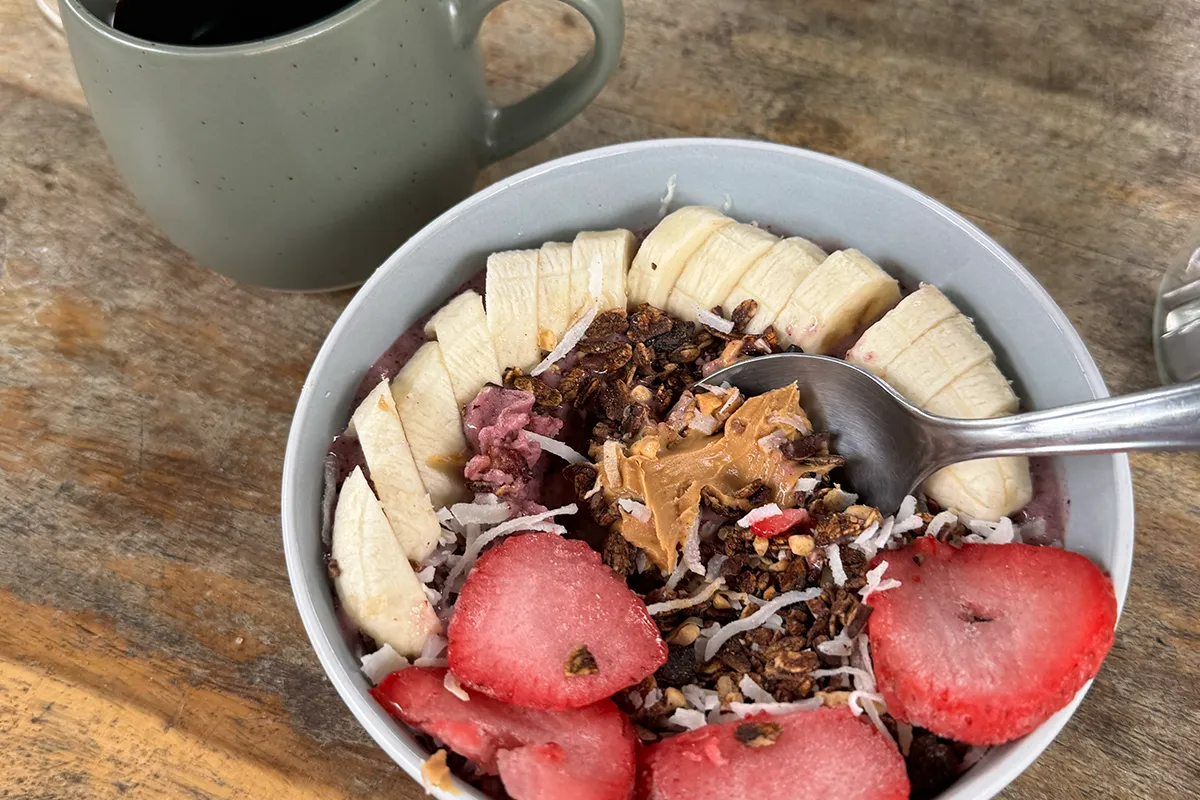
As mentioned previously, hydration is the first priority, but nutrition also plays a quiet and important role. Foods rich in magnesium and potassium can support muscle recovery and reduce the likelihood of fatigue building into cramp. Bananas, nuts, seeds, and coconut water are simple, accessible options that fit easily into a surf trip routine.
That night in the Alps, cramp didn’t care how far I’d already run or that the finish line was still hours away, it simply arrived when fatigue, load, and timing all collided in the wrong way.
Bodyboarding isn’t so different.
Whether you’re halfway through a long paddle out, fighting a strong rip, or deep into your third session of a bodyboard trip, cramp always shows up at the same point: when preparation falls just slightly short of demand. And just like in that race, the difference between struggling through it or moving past it often comes down to how well you’ve managed everything before that moment, hydration, conditioning, recovery, and pacing.
Nobody books a surf trip hoping to sit on the beach rubbing out a locked calf. The goal is always the same: more waves, longer sessions, and better days in the water. Staying ahead of cramp is a big part of making that happen.
If you have your own secret remedies for cramps or additional points worth mentioning then be sure to head over to our Bodyboard Holidays Community WhatsApp Group, where the inspiration for and many of the quotes in this blog came from. It’s a great place to meet like minded people (remotely) while also using it as a place to answer all your bodyboarding related burning questions as well as a place to share your boogie stoke.
Alternatively, if you’d like to meet such cool folk in person while also progressing your bodyboarding, then you can also explore our upcoming trips to Costa Rica, El Salvador or join me in Portugal, I’d love to show you around!